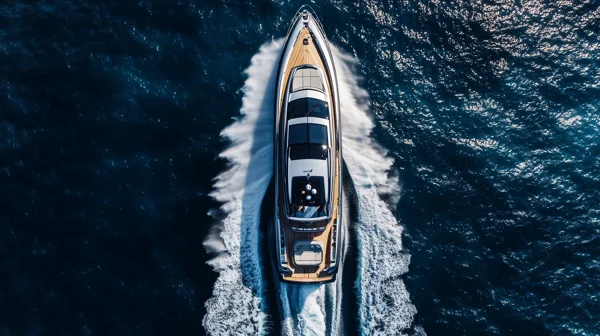
Charter disruption in a volatile market: what yacht owners need to know
As the Mediterranean yacht charter season gets into full swing, many programmes are already fixed and contracts signed. This year, however, is playing out against an unusually uncertain geopolitical backdrop. Ongoing conflicts and regional instability are already affecting vessel movements, operational decisions and running costs.
This article has been prepared by Emma Nowell and Linda Roxburgh, partners in our superyacht team, drawing on their experience advising owners and charterers on private yacht charter arrangements.
In these unprecedented times, parties’ legal rights with respect to charter disruption may not always align with commercial expectations.
While every case turns on its facts, a number of recurring issues are emerging in practice.
DELIVERY RISK AND THE LIMITS OF FORCE MAJEURE
Where a yacht charter has been agreed, the owner is required to deliver the yacht at the agreed time and place. But what are the parties’ rights if delivery is delayed or made impossible by geopolitical events beyond the owner’s control, such as conflict zones, deviations to avoid unsafe areas or physical damage to the yacht? There is a very real risk that yachts currently in the Persian Gulf will be unable to safely transit the Strait of Hormuz in time to meet contractually agreed delivery dates for charters in the Mediterranean this summer.
Under English law, disruptions due to geopolitical events are not likely to be a defence to an owner’s failure to comply with its contractual obligations, unless the parties have agreed otherwise in their contract. Force majeure is not an automatically applicable legal principle, but has to be specifically included in a contract. The standard form contracts such as the MYBA Charter typically include a force majeure clause which defines what events will be a defence to non-performance. In the MYBA Charter, this includes events such as war, blockade, invasion and government action. For an owner to rely on force majeure, two requirements must be satisfied: (i) the event causing disruption must fall within the contractual definition in that contract (so an event that is force majeure under one contract may not be force majeure under another); and (ii) such event must have directly caused the delay or failure to deliver.
This causation requirement is often where difficulties arise. The fact that a conflict exists somewhere in the world will not be sufficient. The owner must demonstrate a clear and direct link between the conflict and the inability to perform. If other factors contribute - such as operational issues or crew decisions – the ability to rely on force majeure may fall away.
Where a force majeure delay is established, the charterer’s remedies are limited. For short delays, the charter typically continues with a pro-rata reduction in the charter fee to reflect a shorter charter period. For longer delays or non-delivery, the charterer’s primary remedy is to cancel the charter, and recover the deposit and any other sums paid in advance. This is very different to the charterer’s rights where the owner’s failure to deliver is not considered to be the result of force majeure, where the owner may be required to reimburse the charterer with all sums paid in advance plus liquidated damages of up to 50% of the charter fee.
Importantly, where force majeure applies, the charterer generally cannot make a wider claim for damages against the owner – for example, for the increased cost of chartering a replacement vessel at short notice, or any other direct or indirect loss that the charterer may have suffered. The protection conferred on an owner by an effective force majeure clause can be significant, but only if the evidential threshold is met.
CHARTERER’S LIMITED RIGHTS OF CANCELLATION
Charterers are often surprised by how limited their ability to cancel the charter can be.
If the yacht is ready and able to perform, there is no general right to walk away simply because geopolitical conditions have made the charter less attractive.
The charterer’s only option is to cancel under the standard contractual regime, typically Clause 11 of the MYBA form, and pay the costs set out in that clause.
The financial consequences of cancellation can be significant. The owner may be entitled to retain the deposit paid by the charterer, and any further instalments of the charter fee which have fallen due at the time of cancellation.
There is, however, a balance: the owner must use “best endeavours” to re-let the yacht and give credit to the charterer for any replacement booking.
ITINERARY DISRUPTION AND THE CAPTAIN’S DISCRETION
Most MYBA Charters define a cruising area, though the level of specificity varies. Within the agreed cruising area, the charterer can give instructions for the yacht’s movements, but those instructions are subject to important limitations. In particular, the captain retains broad discretion to refuse orders where a route is not legally permitted, not safe or “proper”, or may jeopardise timely redelivery or breach insurance or other operational restrictions. In times of conflict the cruising area (or part of it) may become difficult, impractical or even unsafe to access.
Geopolitical instability may therefore restrict the charter in practice even if the contract can technically still be performed. In extreme cases, a charterer may be able to argue that a charter contract has been frustrated if the core purpose of the charter has been undermined. However, under English law, frustration is a high threshold and is unlikely to apply, unless performance of the specific aims of the charter (e.g., to visit a unique site that cannot be substituted) has become fundamentally impossible.
REDELIVERY RISK: WHERE LIABILITY FALLS
The charterer is responsible for timely redelivery of the vessel under the terms of the charter. However, if redelivery is delayed due to a force majeure event, the charterer must return the yacht as soon as possible and will generally not be liable for additional charges (except for a pro-rata additional charter fee for the extra time the charterer had the use of the vessel).
The consequential risk of delay, such as late delivery under the next charter, will remain with the owner (who may or may not be able to claim force majeure under that next charter to avoid being liable to the next charterer).
By contrast, where delay is not due to force majeure—such as where the charterer disregards the captain’s advice or alters the itinerary—the consequences are significantly more severe. The charterer may be liable for increased hire (often at an enhanced rate), all additional operating costs and potentially wider losses flowing from the delay.
FUEL AND COST PRESSURES: A SHIFTING LANDSCAPE
One of the most immediate impacts of recent geopolitical events has been on fuel costs and availability.
Under the MYBA charter contract, charterers typically bear the cost of fuel during the charter through the Advance Provisioning Allowance (APA). That insulates the owners to some degree from big price fluctuations, but volatility still presents practical challenges. APA estimates may quickly become outdated, charterers may be required to provide additional funds at short notice, and in some regions fuel availability itself may become uncertain.
At the same time, owners remain exposed to increased costs in areas such as insurance, the costs of which will be for the owner unless specifically agreed otherwise, and the costs associated with positioning of the yacht between charters.
In more extreme scenarios, such as fuel rationing or lack of supply, questions may arise as to whether performance is affected to the extent that force majeure or even frustration could apply. As with many aspects of charter risk, the answer will be highly fact-specific.
KEY TAKEAWAYS
Whilst the MYBA charter provides a structured framework for dealing with disruption caused to charters by geopolitical events, the outcomes will depend heavily on the facts of each case and the precise wording of the contract.
Parties cannot assume that they will be released from their contractual obligations in the event of delays and scheduling disruption resulting from geopolitical events. Parties must look closely at causation, contractual definitions and the allocation of risk within the charter.
For both owners and charterers, careful drafting of the charter agreement, early identification of potential issues and understanding rights, remedies and risks under the charter will be critical to managing risks and minimising disruption in an increasingly volatile operating environment.
Click here to download this insight.
Share Article
Related Expertise
Contributors


Related Articles

Buying a yacht? What happens when something goes wrong
Post-delivery guarantees under the MYBA MOA: the one area where the Seller remains on the hook
A familiar scene at the Monaco Yacht Show - and a commission question nobody has a clean answer to