Charting the future: MASS regulation update
Introduction
A year ago, the spotlight from a lawyer’s perspective from advising clients in the sector was on Uncrewed Surface Vessels (USVs) between 2–24m. Fast forward twelve months, and the market has surged ahead—notably driven by global conflicts and rapid technological progress. Today, our clients are actively engaged with USVs ranging from 14m to nearly 40m, signalling a dramatic shift in both ambition and capability.
Autonomy is now also front page news. Governments worldwide are making record investments in naval autonomy and uncrewed tech, with daily footage from Ukraine and Russia highlighting the real-world impact of USVs in modern warfare. The UK Defence Investment Plan (DIP), announced on 30th June 2026, included major new commitments to autonomous maritime systems, reinforcing the UK’s leadership in maritime innovation. This builds upon the announcement earlier this year that the Royal Navy’s £12.3 million contract with Kraken Technology Group for 20 uncrewed boats which demonstrates the drive to integrate crewed and uncrewed forces.
As technology and client demands reshape the MASS sector at breakneck speed, the UK regulatory and operational landscape is evolving almost as rapidly—bringing both new opportunities and new challenges for USV owners and operators.
Terminology: Cutting Through the Noise
With new entrants and established players flooding the sector, using the right terminology has never been more important. Terms like “autonomous,” “remote,” and “enhanced automation” are often used interchangeably, leading to confusion about what actually qualifies as a Maritime Autonomous Surface Ship (MASS).
Enhanced automation alone does not make a vessel a MASS. The defining feature is the use of autonomous or remotely-operated technology to augment or replace functions traditionally performed by onboard crew. As regulations and contracts increasingly reference these terms, consistency and clarity is essential for compliance, investment, insurance, and operational decision-making.
UK Regulatory Pathways: Real Progress, Real Support
Since the launch of Workboat Code Edition 3, the UK’s regulatory landscape for USVs has evolved at pace. As we highlighted in our January 2025 article which can be found here, owners and operators now have multiple compliance routes. The MCA recently confirmed that 35 applicants have successfully navigated the MGN 664 process, and nearly 10 USVs have achieved Work Boat Code 3, Annex 2 compliance—a significant leap forward compared to 12 months ago.
Responding to industry feedback, the MCA also launched the UK Maritime Innovation Hub (UKMI), providing coordinated, expert regulatory engagement for innovative maritime projects. Our recent experience with UKMI was seamless and practical. The clear message: engage early. Whether you’re developing an R&D platform, planning trials, or preparing a large-scale USV, UKMI can help you map your regulatory pathway and avoid costly delays.
IMO MASS Code Now In Force
As of 1 July 2026, the IMO International Code of Safety for Maritime Autonomous Surface Ships (MASS Code) is officially in force. While it is a non-mandatory instrument today, it has been developed to facilitate future transition to mandatory status expected on 1st Jan 2032. This landmark Code provides the first international regulatory framework for autonomous and remote ship operations, ensuring safety, security, and environmental responsibility. It supplements existing IMO instruments like SOLAS and sets high-level requirements, leaving Administrations to interpret and apply these standards to new technologies.
Code Structure
The MASS Code applies to cargo ships subject to SOLAS Chapter I, including associated Remote Operations Centres (ROCs) with autonomous or remote systems, where the Administration finds compliance with other IMO instruments impracticable or insufficient.
- Part I: Introduction, principles, objectives, and definitions.
- Part II: Principles for MASS and MASS functions, including surveys, certification, risk assessment, system design, software, operations, security, manning, and training. These principles must be met for MASS approval and certification.
- Part III: Goals and functional requirements for navigation, connectivity, remote operations, vessel structure, fire protection, search and rescue, cargo, anchoring, machinery, and electrical installations. Not all chapters of Part III will apply to every vessel; applicability depends on the modes of operation and functions being certified.
The Code also includes:
- Appendices: Certificate and record formats, approval process details, and operational frameworks.
- Annexes: Certificate templates and guidance materials.
The Code does not apply to cargo high-speed craft, warships, naval auxiliaries, or other government-owned ships in non-commercial service. While the Code is mandatory for ships over 500 gross tonnes, IMO has expressly invited governments to apply it “as far as practicable” to vessels under 500gt.
There is a common misconception that the Code is only relevant for larger MASS, but its principles are intended to guide the safe operation of all MASS, regardless of size. The MCA has confirmed that the Code should not be ignored and may be used as guidance for assets over 24m but under 500gt, even if not formally required.
While the Code is comprehensive, spanning numerous chapters and technical requirements, this introductory article does not attempt to cover every provision in detail. Instead, we highlight and discuss a selection of the most interesting and practically significant chapters for owners, operators, and stakeholders.
Chapter 5: Certification – No ROC Left Unturned!
A standout feature of the Code is its rigorous certification regime. Every MASS must hold a valid MASS Safety Certificate, issued following an initial or renewal survey confirming compliance with the Code’s requirements.
This certificate must be accompanied by a MASS Record, which includes:
- Description of the Concept of Operations (ConOps)
- Survey requirements for relevant systems
- Task allocation summary
- Regulatory gap analysis
- List of any approved Remote Operations Centres (ROCs) for the MASS
For each MASS, the validity, survey dates, and endorsements of the MASS Safety Certificate must be aligned with the relevant SOLAS certificates, following the harmonised system of survey and certification principles. Remote Operations Centres (ROCs) also face robust requirements. Each ROC operating a MASS must hold a valid MASS ROC Certificate, issued after an initial or renewal survey.
This certificate is accompanied by a MASS ROC Record, detailing:
- Description of the ConOps
- All operational restrictions on the ROC
- Infrastructure for connectivity, including performance and quality of service as accepted by the Administration.
These records are designed to be practical and informative, summarising the operational concept and highlighting key issues for surveyors. This approach ensures that both MASS and their ROCs are subject to thorough oversight.
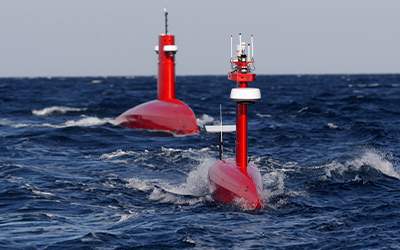 Exail - DriX
Chapter 10 – Software Principles
Chapter 10 sets out high-level principles to ensure that all software used on MASS, or supporting MASS functions, is reliable, trustworthy, safe, and secure. Rather than prescribing requirements for specific software, the Chapter is intentionally drafted to be flexible—recognising that software technologies are rapidly evolving and will continue to develop over time. This flexible, principles-based approach is designed to accommodate future advancements, but it also presents a significant challenge for Administrations and surveyors. Assessing compliance will require a careful, case-by-case evaluation of whether the software in use meets the overarching standards of reliability, safety, and cybersecurity set by the Code.
Chapter 14 – Manning, Training and Watchkeeping
Chapter 14 addresses the unique challenges of manning, training, and watchkeeping for MASS. The Code allows Administrations to apply the training and watchkeeping standards set out in the 1978 STCW Convention and STCW Code to personnel assigned to Remote Operations Centres (ROCs). In practice, a ROC may be treated as a directly associated location to the navigational bridge or machinery space, meaning that remote operators may be subject to the same safe manning standards as onboard crew.
Importantly, while the Code recognises that a MASS may have multiple Masters assigned during a single USV voyage, it is explicit that only one Master can be responsible for the USV at any given time. This ensures clear command and accountability, even as operational models evolve.
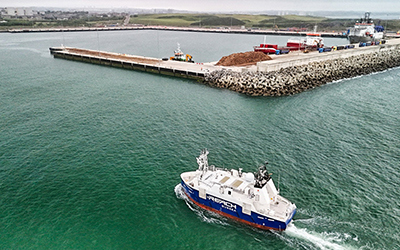 Reach Subsea - Reach Remote
Conclusion
The pace of change in the MASS sector shows no sign of slowing. The UK continues to set the benchmark—not just through record public and private investment, but also by fostering a regulatory environment that is increasingly clear, practical, and supportive of innovation. With the Code now in force, stakeholders have a robust international framework to guide the safe and compliant operation of autonomous vessels.
The UK’s proactive stance—through the MCA, the UK Maritime Innovation Hub, and ongoing industry engagement—means owners and operators have more support and clearer regulatory pathways than ever before. However, it’s important to recognise that the Code’s entry into force is not an instant solution. The real work begins now: the Code must be interpreted, applied, and, where necessary, refined. Early adopters and pioneers will undoubtedly encounter challenges and frustrations as they navigate these new standards.
Many hurdles remain. Successfully navigating the evolving regulatory landscape will require ongoing collaboration between industry, regulators, and technology providers. Those who engage early, stay informed, and work together will be best positioned to seize the opportunities that autonomy brings.
Event Details
MASS @ Moorgate
Wednesday 09 December 2026
9am – 7pm
Venue: Stephenson Harwood LLP, 1 Finsbury Circus, London EC2M 7SH
Register interest in attending here
Title image: ZeroUSV – Oceanus
Share Article
Related Expertise


Related Articles

Buying a yacht? What happens when something goes wrong
Mind the gap: Strait of Hormuz disruption - risk allocation for traders and charterers
The English High Court means the English High Court